Who Made the Original and How the Real Game Actually Works
Here's the one rule that changes everything for UK players: the £5 stake cap per spin. That ceiling applies to Chicken Road 2 on every UKGC-licensed site, and if you're 18–24, it drops to £2. Affordability checks kick in from £150 net deposits a month, using credit-reference data at the first stage. Those two facts alone rule out the clones you'll find advertised on social media—unlicensed sites don't enforce stake caps, don't run affordability checks, and aren't in the UKGC public register.
This page unpacks the original game: who built it, how a round works from the player's seat, the real numbers from the tech sheet, the mechanics one by one, which clones circulate and how they differ, and the ten-second check that you're on the original. The questions below come straight from live-chat logs—these are the things players actually ask before they deposit.
Who built the original and where is the certification trail?
The original Chicken Road 2 was developed by a studio that specialises in crash-style games with provably fair RNG. The game carries GLI-19 certification—that's Gaming Laboratories International's standard for RNG and game logic in interactive gambling. GLI is one of the accredited test houses the UKGC accepts, so a GLI certificate means the maths have been audited against the tech sheet and the outcome-generation algorithm has been tested for bias.
The studio doesn't sell direct to players. Instead, it licenses the game to operators who hold remote gambling licences in their jurisdictions. For the UK market, that means the operator serving you needs a UKGC remote licence, and the licence number sits in the footer of every page. The operator pays 40% Remote Gaming Duty on net gaming revenue—that's the tax hike that came in April 2026—and your winnings are tax-free.
How a round actually works from the player's seat
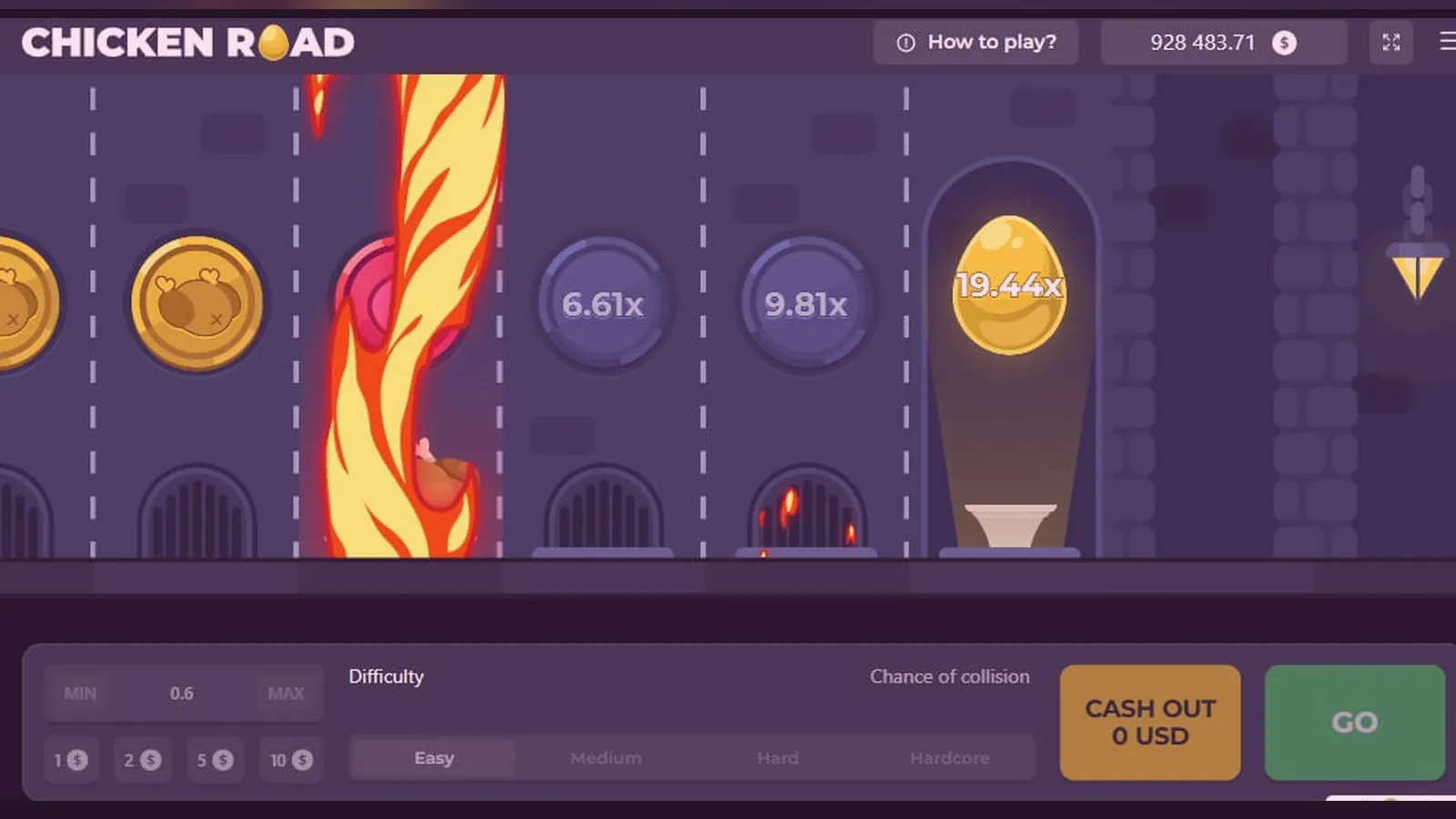
You pick your stake—anywhere from £0.10 to £5.00, or £0.10 to £2.00 if you're 18–24—and click to start. A chicken appears at the bottom of a vertical grid, and a multiplier ladder runs up the side, starting at 1.00×. Every step the chicken takes upward without hitting a trap multiplies your stake. You can cash out at any point by clicking the button; your payout is your stake times the current multiplier, minus the inevitable wagering requirement.
The grid is seeded with hidden traps. If the chicken lands on one, the round ends and you lose the stake. The number of traps depends on the difficulty level you chose before the round: fewer traps mean lower multipliers per step, more traps mean higher multipliers but a shorter expected run. The RNG decides trap positions when you click to start, and the provably fair system lets you verify the seed and outcome hash after the round closes.
- Pick your stake and difficulty level.
- Click to start; the RNG seeds the grid with traps.
- The chicken climbs; the multiplier increases with each safe step.
- Cash out before a trap, or the round ends and the stake is lost.
- Your balance updates with the payout, subject to wagering.
The real numbers from the tech sheet
The tech sheet is the rulebook the regulator checks. Here are the headline figures for Chicken Road 2:
RTP is theoretical and long-run. High volatility means you'll see stretches where the chicken hits a trap on the second or third step ten rounds in a row, then one round where it reaches 50× or 100×. That's not a software fault; it's the maths working as designed. The max win of 10,000× stake is capped by the operator's max payout per round, which on UK sites is usually £10,000 to £250,000 depending on the licence holder.
The mechanics one by one
Difficulty levels: you choose before the round starts. Low difficulty seeds fewer traps, so the chicken tends to climb higher, but each step adds less to the multiplier. High difficulty packs more traps, which raises the multiplier per step but shortens the average run. Medium sits in between and gives the 97.0% RTP. The choice is yours, but the house edge is baked in at every level.
Cashout timing: the multiplier updates in real time as the chicken climbs. You can cash out after any safe step. If you wait for one more step and the chicken hits a trap, the stake is gone. The optimal cashout point doesn't exist—every step is an independent RNG event, and past climbs tell you nothing about the next trap's location.
Provably fair verification: after the round, the game discloses the server seed, client seed, and nonce that generated the outcome. You can feed those into a third-party checker or the site's built-in verifier to confirm that the trap layout matched the hash shown before you clicked to start. This proves the operator didn't alter the result mid-round, but it doesn't change the house edge or predict future outcomes.
- Autoplay: set a number of rounds and a stop-loss or stop-win limit; the game runs until one condition is met or you click to stop.
- Statistics panel: shows your last 50 rounds, average multiplier, win rate, and longest climb; useful for spotting variance but not for beating the RNG.
- Sound and animation speed: adjustable in settings; turning off animations speeds up rounds but doesn't affect outcomes.
Which clones circulate and how they differ
Type the game name into a search engine and you'll find APK download sites, Telegram bot casinos, and offshore domains with no UKGC licence. These are clones—rebuilt interfaces that mimic the original's look but run different RNG implementations. Some change the RTP, some skip the GLI certification, and many don't enforce stake caps or affordability checks because they're outside UK jurisdiction.
| Feature | Original on UKGC site | Typical clone |
|---|---|---|
| Licence | UKGC remote licence in footer | Curaçao, Costa Rica, or unlicensed |
| Stake cap | £5.00 (£2.00 for 18–24s) | No cap, or £100+ per round |
| RTP disclosure | In game rules and tech sheet | Often undisclosed or unverified |
| Certification | GLI-19 or equivalent | None, or house certificate only |
| KYC and affordability | Before deposit and withdrawal | Skipped or minimal |
| Dispute resolution | UKGC ADR scheme | No statutory route |
The other giveaway: clones often advertise via Instagram or TikTok with videos of players hitting 500× or 1,000× multipliers in a few seconds. Under CAP codes, UK advertising must not misleadingly emphasise the chance or size of a win, and it must include safer-gambling messaging. If the ad shows none of that, it's marketing an unlicensed product.
The ten-second check that you're on the original
- Scroll to the footer and look for a UKGC licence number—it's a five- or six-digit reference starting with 3 or 4.
- Copy the operator name from the footer and search the UKGC public register at gamblingcommission.gov.uk.
- Match the licence number in the register to the one in the footer; if they don't match or the operator isn't listed, leave the site.
- Check that the game rules disclose RTP, max win, and bet range in GBP, not dollars or crypto.
- Look for GAMSTOP branding—every UKGC licensee must link to the self-exclusion scheme.
- Try to deposit more than £5.00 in a single game round; the software should block it if you're over 24, or block anything above £2.00 if you're 18–24.
Where the original runs for a player from this market
The original game appears in the lobby of UKGC-licensed casinos that carry the studio's portfolio. You won't find a standalone Chicken Road 2 app in the Google Play Store or App Store—crash games usually run in the browser or as a progressive web app that you add to your home screen. The advantage of the browser version: it updates automatically, no APK sideloading required, and it's tied to the operator's UKGC licence.
Demo play is common on UK sites, but many operators now show free play only to logged-in, age-verified accounts. That's a recent shift following UKGC guidance on underage access. If you see a «Play for Free» button without logging in, the site might not be following current rules. Real-money play always requires a deposit, and deposits require age and identity checks before the funds clear.
Payment methods: debit card (Visa or Mastercard), PayPal, Apple Pay, Open Banking via Trustly, or paysafecard. Credit cards have been banned since 2020. Withdrawals go to the same method you deposited with, or to a UK bank account via Faster Payments if the original method doesn't support payouts. The first withdrawal takes 24–48 hours for document checks; after that, e-wallet payouts arrive within a few hours, and bank transfers land the same day or within two working days.
What happens if you self-exclude or hit an affordability check
GAMSTOP is the UK's self-exclusion scheme: one registration blocks every UKGC-licensed site for a minimum of six months, up to five years. You pick the term when you register, and there's no override—if you try to open an account on any licensed operator during the exclusion, the system rejects it. When the term ends, exclusion lifts automatically, but many operators add a 24-hour cooling-off period before you can deposit again.
Affordability checks start from £150 net deposits in a calendar month. The first stage uses credit-reference data—no documents required, but the operator may ask you to confirm your income source. If your deposits continue to rise, the operator will request payslips, bank statements, or tax returns. If you don't provide them, deposits are suspended. This isn't the operator being difficult; it's a licence condition introduced to prevent gambling-related harm.
If you're struggling, BeGambleAware (begambleaware.org) offers free, confidential support. The service is funded by the industry but run independently. You're 18 or over to play, but age alone doesn't mean the game is right for you. If it stops being entertainment, it's time to step back.
FAQ
How do I know the RNG isn't rigged in the house's favour?
The RNG is certified to GLI-19, which means an accredited test house audited the algorithm and confirmed it matches the published RTP. The provably fair system lets you verify each round's seed and hash after it ends, so you can prove the operator didn't alter the outcome mid-round. That said, the house edge is baked into the maths—over thousands of rounds, the RTP of 96.5–97.8% means the house keeps 2.2–3.5% of all stakes. The RNG isn't rigged; the game is designed to favour the house in the long run.
Can I play the original without depositing real money?
Many UKGC-licensed sites offer demo play, but recent guidance means free play is often restricted to logged-in, age-verified accounts. You won't find a demo on an unlicensed site that mirrors the original's certified RNG. If you want to try the mechanics risk-free, sign up on a licensed operator, complete age verification, and look for the «Play for Free» or «Demo» button in the game lobby. No deposit is required for demo mode, but you can't cash out demo winnings.
Why is the stake capped at £5.00 when I see videos of people betting £50 or more?
Those videos are from unlicensed sites or non-UK jurisdictions. The £5.00 cap (£2.00 for 18–24-year-olds) is a UKGC rule that applies to all online slots and slot-like games, including crash games. Operators enforce it in software—you can't override it by editing the stake field. If a site lets you bet above that limit without checking your age, it's not licensed by the UKGC and you're playing outside UK consumer protections.
What's the fastest way to get my winnings out?
E-wallets like PayPal are usually fastest—a few hours to 24 hours after the operator approves the withdrawal. Faster Payments to a UK bank account take the same day to two working days. Debit card withdrawals can take one to three working days. The first withdrawal is always slowest because the operator checks your identity documents; that adds 24–48 hours. After you're verified, subsequent withdrawals are quicker. The payment method must be in your own name—credit cards are banned, and you can't withdraw to someone else's account.
Do winnings from Chicken Road 2 count towards affordability checks?
Affordability checks look at net deposits: the total you've put in minus the total you've withdrawn. If you deposit £500 and withdraw £400, your net deposit is £100 for that period. Winnings reduce your net figure, so a big cashout can reset the clock. But if you keep redepositing winnings and your net deposits climb above £150 a month, the operator will still run the check. The threshold is based on money flowing in, not your balance at any one moment.
Can I download an APK of the original game and play offline?
No. The original Chicken Road 2 is a server-based game—the RNG runs on the operator's platform, not on your device. Any APK offering offline play or standalone installation is a clone with a different, uncertified RNG. The real game runs in your mobile browser or as a progressive web app that connects to the licensed operator's server every round. There's no legitimate offline version, and sideloading an APK from an unknown source is a security risk.