What the £5 Stake Cap Does to Your Chicken Road 2 Session
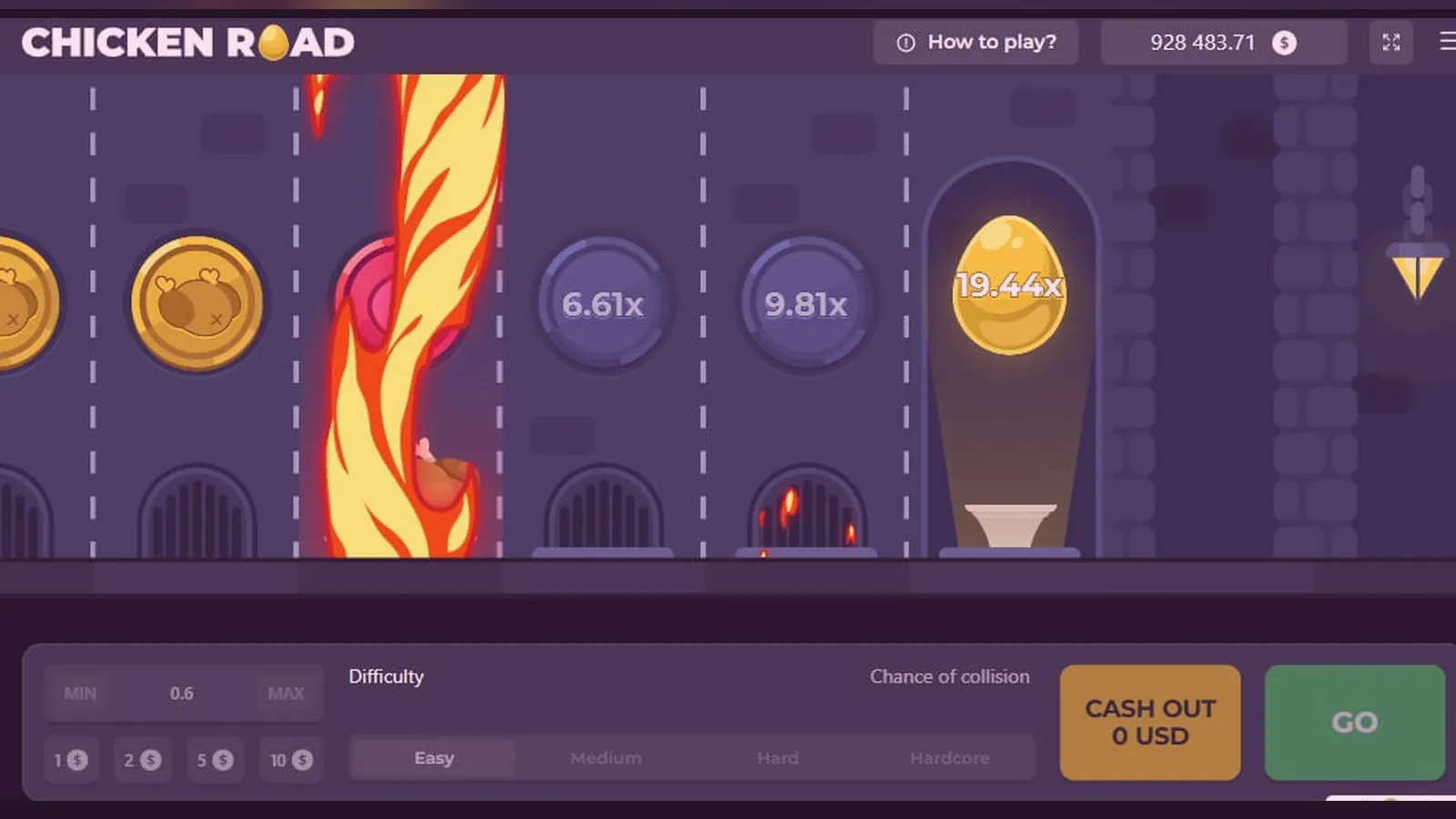
Every UKGC-licensed site serving British players caps your stake at £5 per spin or round—£2 if you're 18 to 24—and that single rule changes how crash games like Chicken Road 2 behave in a real session. Where a player in an uncapped market might chase a 50× multiplier with a £20 stake, you're working inside a tighter frame: slower swings, longer sessions on the same bankroll, and less temptation to bet the rent in one go.
Chicken Road 2 is a provably fair crash game: a chicken walks a road, the multiplier climbs, you cash out before it stops. The maths is transparent, the pace is quick, and the design is clean enough to run on a phone without burning your battery. But the game doesn't care whether you understand variance, and three common beginner mistakes—chasing losses, ignoring the house edge, and misreading bonus terms—cost more than the game itself ever will.
Verdict: Who This Suits and Who Should Walk Past
Chicken Road 2 works if you want a crash game with visible maths, a mobile-first build, and no clutter. It doesn't work if you expect a bonus round to save a bad run, need complex features to stay interested, or plan to wager bonus funds—most UK welcome offers exclude crash games or count them at 10 per cent, turning a £10.00 bonus into £100.00 of work.
The game suits cautious players who set a stop rule, check the multiplier distribution in the provably fair panel, and treat a session as entertainment with a known cost. It doesn't suit anyone who thinks there's a pattern in the RNG, doubles stakes after a loss, or believes a losing streak «must» end soon. Variance doesn't owe you a win.
The Seven Numbers That Shape a Session
Every crash game lives in its maths, and Chicken Road 2 gives you the house edge, the RTP, and the multiplier range up front. Here's what each criterion scores and why it matters when you're playing under UKGC stake caps.
The house edge sits around 3–4 per cent, so over 100 rounds at £1.00 each, you're mathematically expected to lose £3.00 to £4.00. That's the cost of play. Some sessions end ahead, some end behind, but the average trends toward that edge. The £5.00 cap slows the swings: you can't lose £50.00 in five rounds, and you can't win £500.00 from a single 100× hit unless you were staking the max. For a beginner, that's a feature, not a bug.
What Happens on a Phone in Your Lunch Break
Chicken Road 2 runs in the browser—no APK download, no App Store wait, no permission requests. You open the game on a UKGC-licensed site, log in to prove you're over 18, and tap the stake buttons. The multiplier ladder sits in the centre, the cash-out button is thumb-sized, and the bet history scrolls below. Landscape mode gives you more room, but portrait works fine once you're used to the layout.
The game uses minimal data—around 2–3 MB per session—so a 4G connection is enough. Battery drain is low: an hour of play on a two-year-old phone costs about 8 per cent charge. The one weak point is the multiplier ladder on a small screen: if you're chasing a specific exit point above 10×, the cramped spacing makes precise taps harder. Most players cash out by feel, not by number, so it's rarely a problem.
How Bonuses Turn Against You in Crash Games
A £50.00 welcome bonus with 35× wagering sounds generous until you read the terms: crash games contribute 10 per cent, so every £1.00 you stake counts as £0.10 toward clearing the bonus. That £50.00 bonus now demands £17,500 of real turnover—£1,750 once the contribution rate is factored in—and you're doing it inside the £5.00 stake cap. The maths doesn't work for most players.
Some operators exclude crash games entirely from bonus play. Others allow it but void winnings if you break the stake cap or the game-type rule buried in section 12 of the terms. The safest path: treat bonuses as a slots tool, play Chicken Road 2 with your own deposited funds, and check the site's game-weighting table before you commit. GambleAware has a guide to reading bonus terms if you're stuck.
- Wagering: 35× is standard; 50× or higher is a red flag
- Game weighting: crash games usually sit at 0–10%; slots are 100%
- Max bet: often £5.00 or lower during bonus play; breaching it can void everything
- Time limit: 30 days is common; crash sessions eat through time faster than you think
The Three Mistakes That Cost More Than the House Edge
- Chasing losses by doubling your stake: the Martingale system fails because the £5.00 cap stops the progression after three or four losses, and variance doesn't care about your doubling plan. A six-round losing streak at £5.00 costs £30.00, and the next win only recovers £5.00. The maths is brutal.
- Ignoring the house edge and expecting to break even long-term: the 3–4% edge means the game is designed to take a small slice of every stake over time. You might win today, but over hundreds of rounds, the average tilts toward the house. That's not rigged; it's arithmetic.
- Playing bonus funds on a game that contributes 10% without reading the terms first: you'll clear £5.00 of wagering from a £50.00 session, realise the bonus expires in 29 days, and end up forfeiting both the bonus and any winnings tied to it. Always check the game-weighting table.
The fourth mistake is subtler: believing that a long losing streak means a win is «due». The RNG has no memory. Each round is independent. If the last ten rounds crashed below 2×, the next round still has the same distribution. Variance clusters, and that feels like a pattern, but it's noise. The only defence is a stop rule you set before the session starts.
What Players Say—and What the Numbers Actually Show
Player opinions are everywhere, but they're snapshots of variance, not proof of long-term odds. Here's what four players said about Chicken Road 2, with the maths check attached.
- «I cashed out at 12× three times in a row and turned £10.00 into £40.00. Best streak I've had.» — That's a 1-in-1,700 event, roughly. Variance smiled; it won't smile forever.
- «The game crashed at 1.02× four times in ten rounds. Feels rigged.» — Four crashes below 1.1× in ten rounds sits inside normal variance for a 96–97% RTP game. Unlucky, not rigged.
- «I set a stop at £20.00 loss and walked away. Came back the next day and hit a 25× multiplier.» — The stop rule worked. The win the next day is unrelated—if they'd kept playing the first session, they'd have lost more.
- «I tried to clear a bonus on this game and the wagering barely moved. Waste of time.» — Correct. Crash games at 10% contribution are a bonus graveyard. That's a terms problem, not a game problem.
Opinions tell you how variance feels. The house edge, RTP, and multiplier distribution tell you what happens over a thousand rounds. Trust the second set when you're planning a session.
First-Session Blueprint for a £50.00 Bankroll
Here's a cautious plan for your first session on a UKGC-licensed site, starting with £50.00 and the assumption that you're over 18, have passed identity checks, and understand that gambling winnings are tax-free but losses are real.
| Step | Action | Why | |
|---|---|---|---|
| Bankroll | £50.00 deposited via debit card or PayPal | Credit cards are banned for gambling in the UK; use a payment method in your own name | → |
| Stake size | £0.50 per round | Gives you 100 rounds at full loss, or 30–40 rounds at typical variance; the £5.00 cap is your safety net | → |
| Cash-out target | 1.5× to 3× | Frequent small wins smooth the ride; chasing 50× multipliers turns the session into a lottery ticket | → |
| Stop rule | Quit at £30.00 remaining or after 50 rounds, whichever comes first | A stop rule removes the «just one more» trap; set it before you start, not when you're losing | → |
| Check | Look up the operator in the UKGC public register and match the licence number in the footer | Unlicensed sites are illegal to market in the UK and offer no protection if something goes wrong | → |
If you lose the £50.00, that's the cost of the session. If you double it to £100.00, withdraw £50.00 and play with the profit. Either way, register with GAMSTOP if you feel the urge to deposit again before you've thought it through. One registration blocks every UKGC site for six months to five years, and it's free.
FAQ
Does the £5.00 stake cap apply to every round in Chicken Road 2?
Yes. Every UKGC-licensed site caps stakes at £5.00 per round for players aged 25 and over, and £2.00 for those aged 18 to 24. The cap is enforced at the software level, so you can't override it even if you want to.
Can I play Chicken Road 2 on an iPhone without downloading an app?
Yes. The game runs in Safari or Chrome as a web app. Open the site, log in to prove your age, and start playing. No APK, no App Store download, no device permissions. Data use is around 2–3 MB per session.
Do UK welcome bonuses work on crash games like Chicken Road 2?
Rarely. Most bonuses exclude crash games or count them at 10 per cent toward wagering. A £50.00 bonus with 35× wagering and 10% contribution means you'd need £17,500 of turnover to clear it. Check the game-weighting table in the terms before you start.
Is Chicken Road 2 provably fair, and does that stop the house edge?
The game is provably fair: you can verify each round's result using the hash and seed in the panel. That proves the outcome wasn't manipulated after you placed your bet. It doesn't remove the house edge—every round still costs 3–4 per cent on average over time.
What's the fastest way to withdraw winnings from a UK site?
E-wallets like PayPal take a few hours to 24 hours. Faster Payments to a UK bank account take a few hours to two working days. Your first withdrawal will be slower—24 to 48 hours—while the operator checks your ID and address documents. After that, most sites process within a day.